
If your checked baggage was damaged during air travel, it is important to act quickly. Here you can find out how to document the damage, report it to the airline and which deadlines you should keep in mind.
Report damage as soon as possible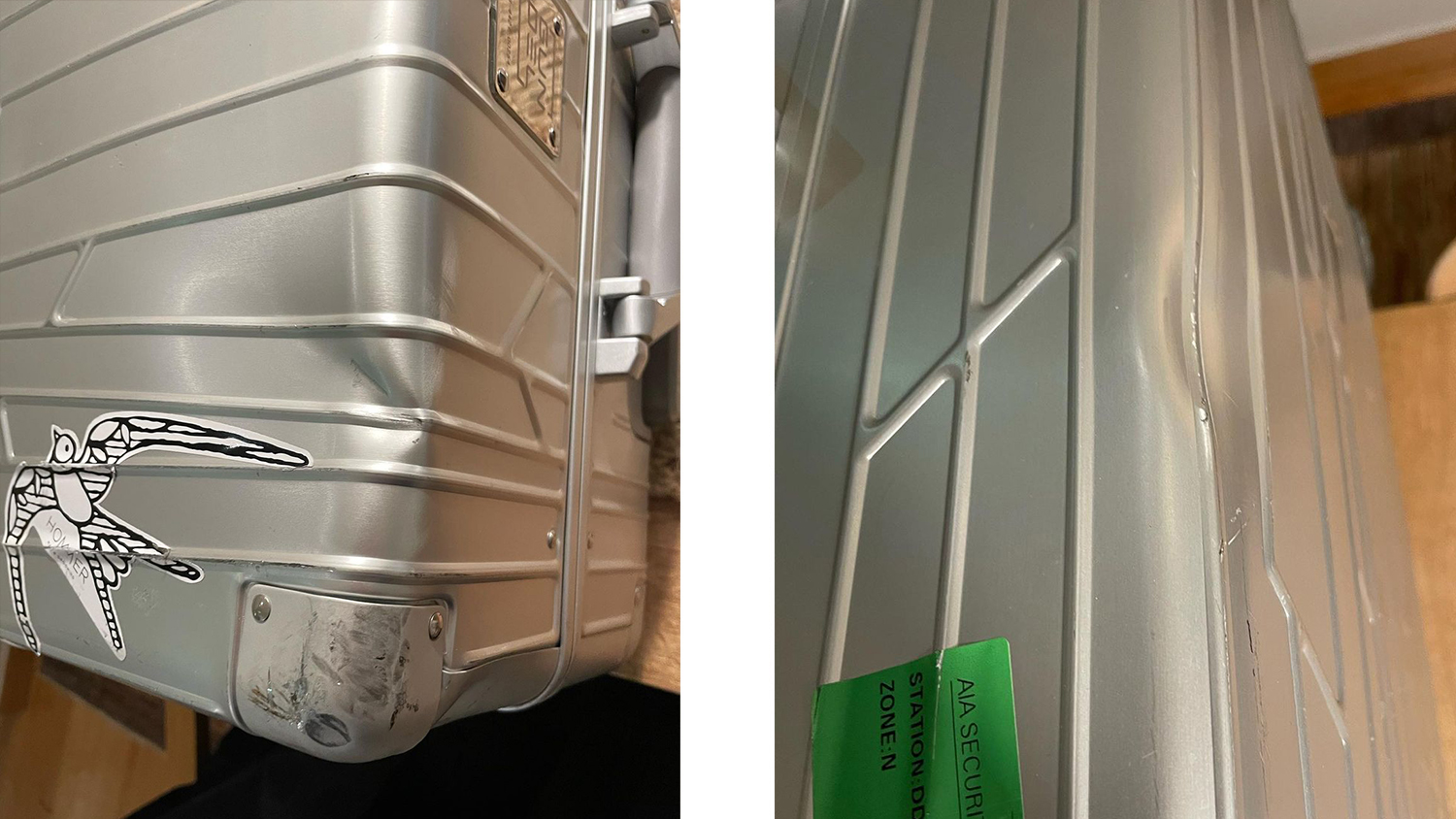
- Check your suitcase for visible damage as soon as possible after collecting it from the baggage carousel.
- If possible, report visible damage immediately at the airport to the relevant baggage service desk or airline.
- Ask for written confirmation or a damage report and keep a copy.
- For damaged checked baggage, a written complaint must generally be submitted to the airline no later than seven days after receiving the baggage.
- Keep your boarding pass, booking documents, baggage receipt and all documents relating to your damage claim.
- Take clear photos of the damaged suitcase and, if possible, the baggage tag.
- Where possible, carry valuables, important documents and particularly fragile items in your cabin baggage.
After a long flight, it is always a relief to see your suitcase appear on the baggage carousel. It is therefore particularly frustrating to discover dents, significant scratches, damaged wheels, broken handles or other damage.
Checked baggage is transported, loaded and transferred several times during a journey. We therefore recommend checking your suitcase shortly after collection and documenting any damage as early as possible.
Document the damage immediately
Photograph the damage before leaving the airport if possible. Take several clear pictures of the damaged area as well as the entire suitcase and the baggage tag.
Report the damage at the airport
If possible, contact the relevant baggage service desk or airline counter directly and report the damage. Ask for a written copy of the report or confirmation of your claim.
Notify the airline in writing
You should also report the damage to the airline in writing within the applicable deadline. For damaged checked baggage, the written complaint must generally be made no later than seven days after receiving the baggage.
If the airline counter is already closed or you only notice the damage after returning home, contact the airline in writing as soon as possible. Do not wait until the end of the deadline.
Keep all documents and evidence
Where possible, include photographs of the damage as well as copies of your boarding pass, baggage receipt and any documents relating to the baggage or damage report. Keep the originals, your booking documents and any available receipts or proof of value.
Where possible, include your flight number and travel date, booking details, baggage number and a brief description of the damage. Add clear photographs of the damaged suitcase as well as copies of your boarding pass and baggage receipt. If you already reported the damage at the airport, also include the corresponding damage report or confirmation.
For international air travel, baggage damage is often governed by the liability rules of the Montreal Convention. These rules include a limit of liability per passenger for the destruction, loss, damage or delay of baggage.
This limit is not expressed as a permanent amount in euros or pounds, but in Special Drawing Rights (SDRs). Its value in your local currency may therefore fluctuate. The liability limit also does not mean that the maximum amount is automatically paid for every damaged suitcase.
Compensation depends on the actual loss suffered and the evidence available. Depending on the circumstances, repair, replacement or financial compensation may be considered.
Protective cover
A suitable suitcase cover can help protect the surface against dirt and light scratches during transport and storage.
Luggage strap
A luggage strap can provide additional security and may help prevent a suitcase from opening unintentionally when subjected to heavy handling.
Keep valuables in cabin baggage
Where possible, avoid placing valuables, important personal documents and particularly fragile items in checked baggage.
If fragile items need to travel in checked baggage, they should be carefully padded and secured to prevent unnecessary movement. Clothing or suitable protective material can provide additional cushioning.
Please also note that an airline’s liability may be excluded or limited in certain circumstances, for example where the damage results from the inherent nature of the baggage or a pre-existing defect.
If checked baggage is damaged, the damage should be reported as soon as it is discovered. A written complaint to the airline must generally be submitted no later than seven days after receiving the baggage.
If the airline counter is already closed or you only notice the damage after returning home, contact the airline in writing as soon as possible. Document the damage with photographs and, where possible, include your boarding pass, baggage receipt and any available documents relating to the baggage or damage report.
A different deadline applies to delayed baggage. A written complaint must generally be submitted no later than 21 days after the baggage has been made available to you.
For legal action seeking compensation under the Montreal Convention, a period of two years generally applies. This usually runs from the date the aircraft arrived at its destination or the date on which it should have arrived.
Depending on the policy, baggage insurance can provide additional protection in cases such as damage, loss or theft. The exact risks covered, compensation limits and exclusions depend on the individual insurance policy.
Before taking out insurance, it is therefore worth checking the policy terms carefully, particularly the coverage limits, excess, exclusions and evidence required when making a claim.
Where you also have a claim against the airline, the way the airline and insurer coordinate compensation will depend on the circumstances and the applicable insurance terms. The same loss will generally not be compensated twice.
What should I do if my suitcase arrives damaged on the baggage carousel?
Document the damage immediately if possible, including with photographs, and report it at the airport to the relevant baggage service desk or airline. Ask for written confirmation of your report and keep all travel and baggage documents.
What if I only notice the damage after returning home?
Report the damage to the airline in writing as soon as possible. For damaged checked baggage, the written complaint must generally be made no later than seven days after receiving the baggage. Include photographs and the relevant travel and baggage documents where possible.
How long do I have to report damaged baggage?
For damaged checked baggage, the written complaint must generally be submitted to the airline no later than seven days after receiving the baggage. Visible damage should nevertheless be reported and documented as soon as possible, ideally before leaving the airport.
Which documents should I keep?
Keep your boarding pass, booking documents, baggage receipt, baggage number and all documents relating to the damage report. Photographs of the damage and invoices or other evidence of value may also be important.
Will I automatically receive the maximum liability amount?
No. The liability limit is a maximum amount, not a fixed compensation payment. Compensation generally depends on the actual loss suffered and the evidence available.
Can the airline offer a repair instead of financial compensation?
Depending on the nature and extent of the damage, repair, replacement or financial compensation may be considered. The way the claim is settled depends on the individual circumstances and the applicable liability rules.
Is the airline liable for every type of suitcase damage?
Not necessarily. Normal signs of use or damage resulting, for example, from a pre-existing defect or the inherent nature of the baggage may be assessed differently. The specific circumstances of the damage are important.
What is the Montreal Convention?
The Montreal Convention is an international agreement that governs, among other things, airline liability on many international journeys. It includes rules relating to the destruction, loss, damage or delay of baggage.
If your suitcase arrives damaged after a flight, document and report the damage at the airport whenever possible. Keep your travel documents, take clear photographs and also submit your written complaint to the airline within the applicable deadline.
The more complete your documentation is, the easier it will be to establish when the damage occurred and to assess its extent.
For damaged checked baggage, remember in particular the seven-day deadline after receiving your baggage for submitting a written complaint, and do not wait until the final day to act.
Do you have a question about your GUNDEL suitcase? Simply send us an email.
info@gundel-koffer.de